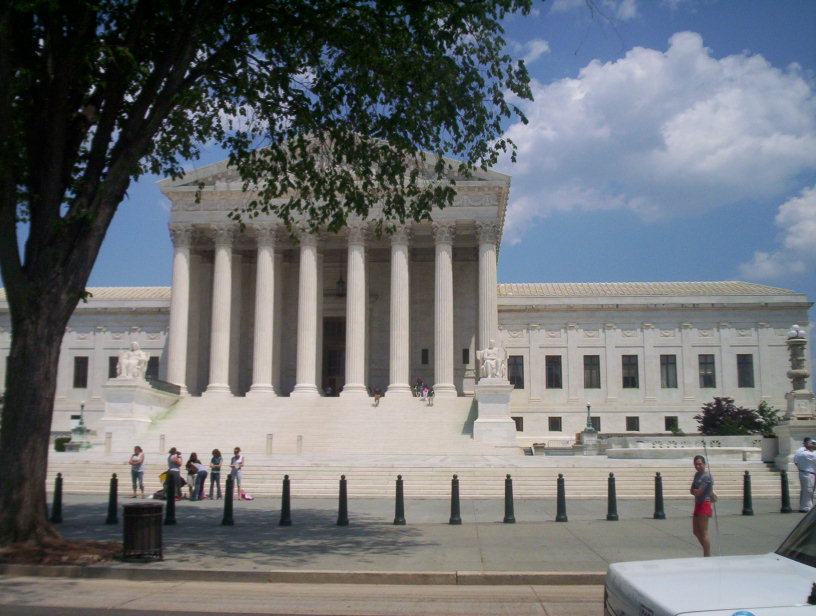
President-elect Trump’s unique financial situation highlights the many layers of regulation and authority which define and confine the office of the President. The Constitution, laws passed by Congress and private contracts all are part of the forced swirling about the question of Mr. Trump’s possible conflicts of interest.
President-elect Trump outlined a reorganization of his businesses and his roles in his companies at yesterday’s news conference. Mr. Trump said, “But I have a no conflict of interest provision as president. It was many, many years old. This is for presidents because they don’t want presidents getting — I understand, they don’t want presidents getting tangled in minutiae. They want a president to run the country. So I could actually run my business. I could actually run my business and run government at the same time. I don’t like the way that looks, but I would be able to do that, if I wanted to. I would be the only one that would be able to do that. You can’t do that in any other capacity, but as a president, I could run the Trump Organization — great, great company — and I could run the country.” (From transcript published by CNBC) This is true and the President and Vice-President are not covered under federal conflict of interest laws.
His attorney, Sheri Dillon, spoke directly to the Emoluments Clause in the Constitution, (Article I, Section 9, clause 8) saying, “The so-called Emoluments Clause has never been interpreted, however, to apply to fair value exchanges that have absolutely nothing to do with an office holder.” While this is true, it is misleading. The Supreme Court has not interpreted the foreign Emoluments Clause or the domestic Emoluments Clause (Article II, Section I, clause 7). Interpretations have come from sitting Presidents and Department of Justice officials but none seem definitive. While Ms. Dillon offers one interpretation of how fees paid to Mr. Trump’s businesses, for hotel stays and rounds of golf for example, would be treated under the clauses, there really is no clear support for this position, nor clear contradiction.
Finally, Mr. Trump, through contracts his business has entered into, may have other responsibilities and conflicts. The most reported one relates to his hotel in Washington D.C., in the old Post Office Building. The contract states that, “No member or delegate to Congress, or elected official of the Government of the United States or the Government of the District of Columbia, shall be admitted to any share or part of this Lease, or to any benefit that may arise therefrom; provided, however, that this provision shall not be construed as extending to any Person who may be a shareholder or other beneficial owener of any publicly held corporation or other entity, if this Lease is for the general benefit of such corporation or other entity.” (GSA Contract, clause 37.19) There may be other contracts or agreements, with banks or other entities that have lent his businesses money, for example, that contain clauses impacted by his becoming President.
The Atlantic has a nice piece looking at the complexity of Mr. Trump’s situation.
Each layer of regulation is enforced or investigated differently with different paths for interpretation and resolution. The Constitutional questions that may arise under the Emoluments clauses will need a party to sue the President over an alleged violation which is not so easy. Who can sue the President?
 39signed
Leave a comment